


Psychological rehabilitation of military personnel
PSYCHOEMOTIONAL REHABILITATION
You might think that the main aspect of this support is to immediately start discussing traumatic memories. However, our experience shows that this is not always the case. First, not every service member is ready to begin discussing their traumas right away. Second, effective stabilization can trigger self-healing processes.
We approach psychoemotional rehabilitation by dividing it into two key categories:
- Support for those returning to the front lines
- Work with those who have transitioned to civilian life

For those returning to the front lines, our goals are:
- Reducing stress and anxiety
- Increasing mental resilience
- Preventing new psychological traumas
- Maintaining functionality in combat conditions
For those who have transitioned to civilian life, we focus on:
- Reconnecting with emotions
- Assisting in building a new life
- Integrating traumatic memories so they do not hinder daily life and can transform into wisdom
HOW DO WE ACHIEVE OUR GOALS?
We employ various approaches, such as individual consultations, group seminars, and social media publications, to support our heroes in their recovery.
One of the most important topics we address is moral injury. In our experience, it often serves as a foundation for developing stress disorders like PTSD or exacerbates their progression. By working with moral injury, we help prevent the emergence of issues such as adjustment disorders, PTSD, or complex PTSD.
Our primary principle in our work is an individual approach to each service member.
Supporting mental health is a crucial step toward leading a fulfilling life after service.
Successful rehabilitation of the military

Military Oleksii
Dnipro
Oleksii is a new participant in our rehabilitation program in Dnipro. He joined the project in July 2025.
In May, during a combat mission, Oleksii suffered a mine-explosion injury. The blast caused serious wounds to both legs: shrapnel damaged his thighs, shins, feet, and gluteal area. As a result, he sustained shattered bones in the heels, metatarsals, and shins, extensive soft tissue damage, and some metallic fragments still remain in his body.
Oleksii is now at the beginning of his recovery journey. Ahead lies a long and challenging process, which will include physical rehabilitation, psychological support, and emotional stabilization.

Military Oleksandr
Irpin
On January 10, 2023, Oleksandr joined the Armed Forces of Ukraine as a mortar operator in the 61st Separate Infantry Brigade. He began his service on the Donetsk front and later spent six months participating in the Kursk operation.
During a missile attack on their position, Oleksandr sustained a severe injury — after three rockets struck the area, he lost his left arm.
Today, he is undergoing pre-prosthetic physical rehabilitation. Together with a physical therapist, he is preparing for the next stage — prosthetic fitting. It’s a challenging but crucial process that brings Oleksandr closer to returning to an active life.
Military Dmytro
Dnipro
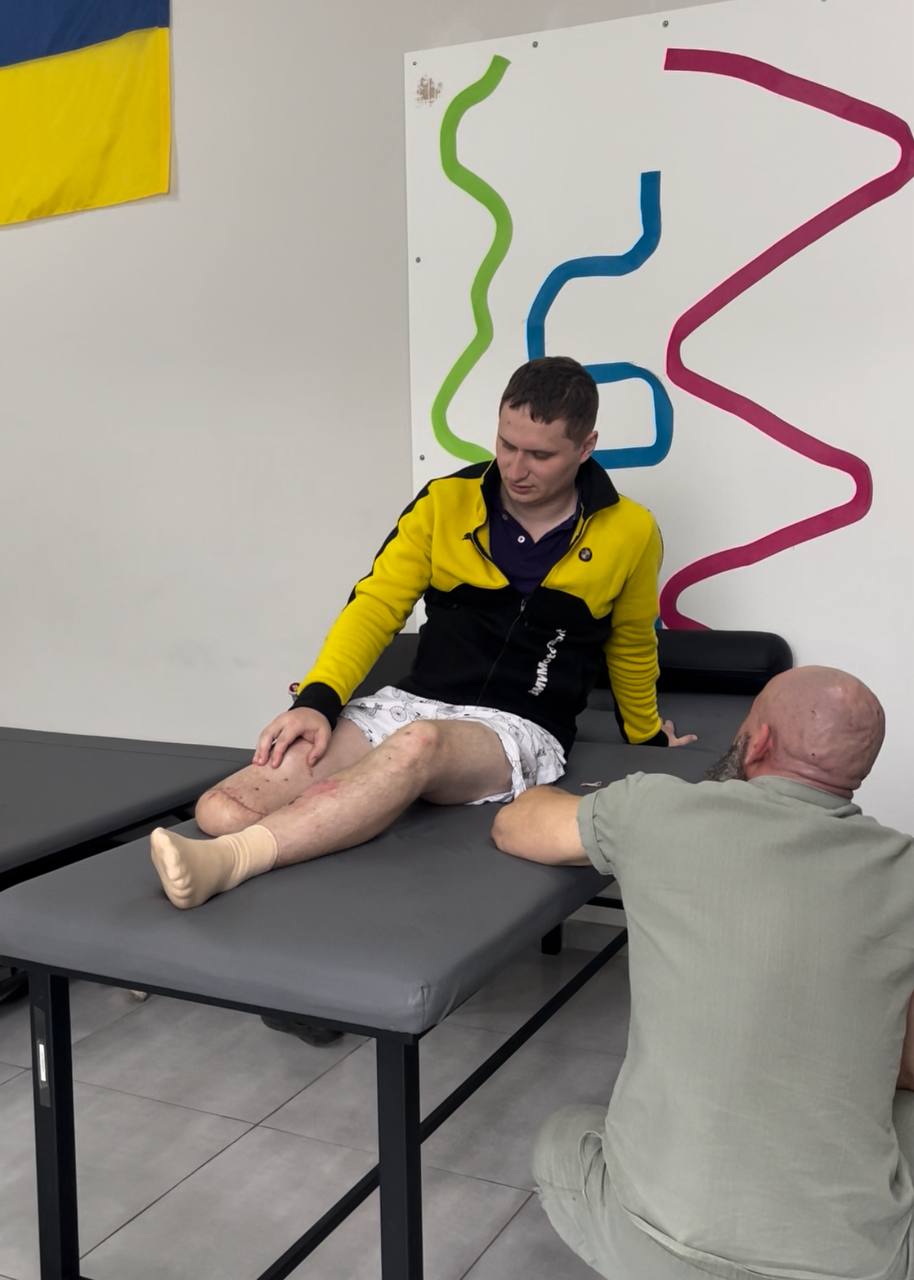
On January 30, 2025, Dmytro sustained an explosive injury resulting in a fracture of the right femur and amputation of the right lower leg.
During rehabilitation, the main focus was on increasing the range of motion in the knee joint. Work was also done to develop strength and balance in the lower limbs. Dmytro underwent preparation for prosthetic fitting.
Currently, he has a complication — an unhealed fracture of the femur. His condition has improved, but on the trauma specialist’s recommendation, he is not yet able to bear weight on the prosthesis.
Therefore, Dmytro is resting for now. In three months, when doctors allow loading on the leg, he will return to rehabilitation to learn to walk with the prosthesis.
Military Vitaliy
Dnipro
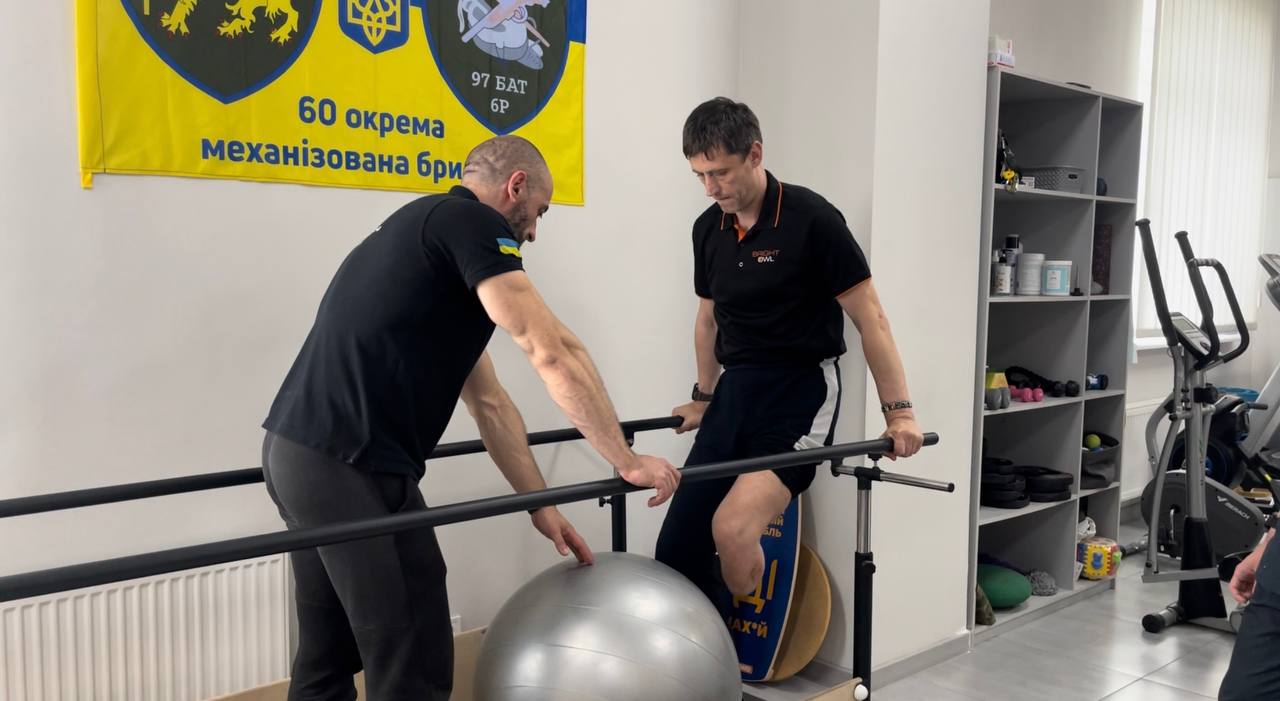
In October 2023, a servicemember sustained a blast injury that resulted in the amputation of a lower limb and multiple other traumas. He experienced constant pain and post-traumatic stress.
Thanks to his perseverance and the support of our foundation, gradual improvements have been achieved: pain has decreased, mobility has improved, and his overall health has stabilized.
Every step on this path matters. We continue to stand by our servicemembers — supporting their recovery and creating new possibilities for the future.
Military Dmytro
Dmytro is a serviceman undergoing rehabilitation as part of our project. We met in May, and he is now nearing the completion of his recovery program.
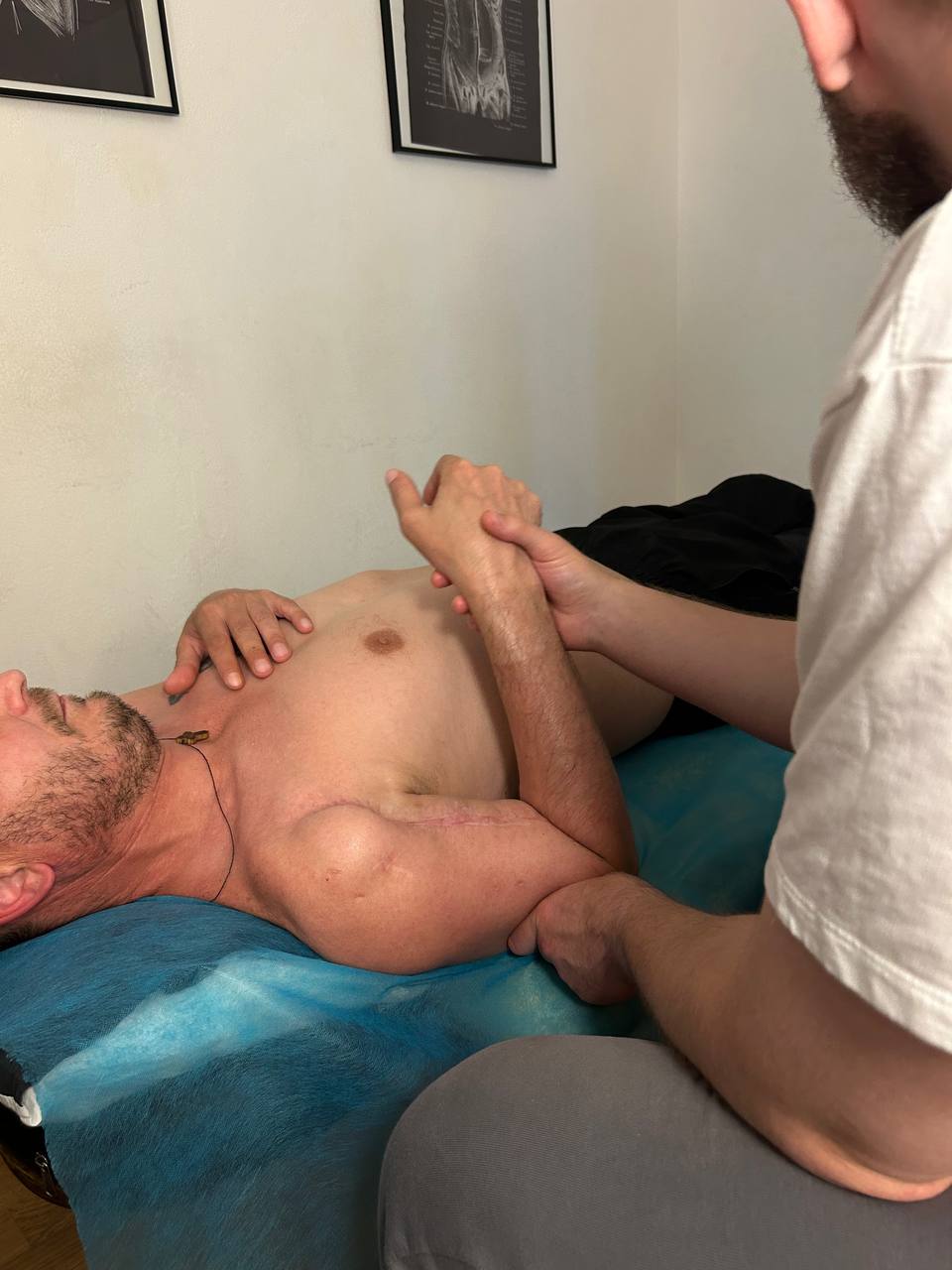
In 2022, Dmytro was injured during a combat mission in the Kherson direction. Since then, he has undergone 11 surgeries and several replacements of metal fixators. Due to prolonged immobilization of his arm, complications developed — muscle atrophy and limited range of motion.
During rehabilitation, the focus was on passive movements. This already brought results: the muscle fibers became active again, and the range of motion gradually increased. After the most recent check-up, the orthopedic trauma doctor recommended gradually increasing the load and introducing new exercises.
Currently, Dmytro continues his recovery independently — in the city where he is temporarily staying for work.

Military Oleksii
Military Pavlo
(city of Lviv)
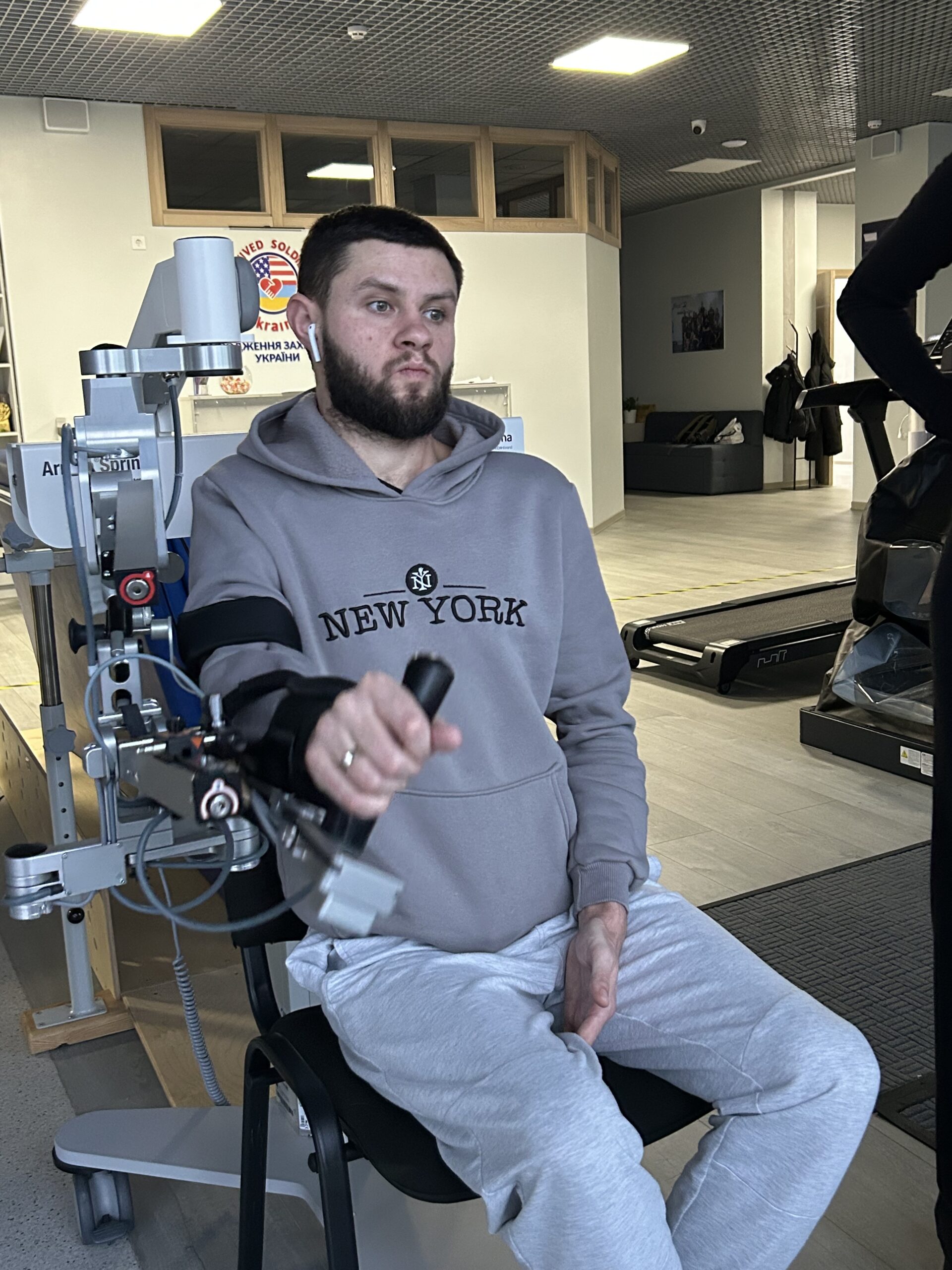
As a result of carrying out a combat mission, Pavlo sustained a mine-explosive injury to the brachial plexus on the right side, which led to weakness, loss of function in his right arm, reduced range of motion, and pain in the shoulder joint area.
Rehabilitation Goal:
Restore the function of Pavlo’s right upper limb so that he can use his arm in daily life again.
Rehabilitation Objectives:
- Increase strength.
- Improve coordination of movement in the right upper limb.
- Enhance overall endurance.
- Reduce pain in the right shoulder.
- Increase range of motion.
After two weeks of rehabilitation, Pavlo has gained strength in the muscles of his right upper limb, particularly in the biceps, triceps, deltoid, and pectoral muscles. Additionally, his pain-free range of motion in the shoulder joint has improved.

Military Vadum
Vadym joined our project in August 2024. After an airstrike, he sustained injuries to both arms, which significantly limited their mobility and caused persistent, exhausting pain. His right arm was almost non-functional in daily life: the fingers were weak, and the hand could not perform a reliable grip. His left arm also had noticeable limitations in the shoulder and elbow and was accompanied by constant discomfort. Due to muscle atrophy, even simple daily actions — holding a cup or getting dressed — required effort and assistance.
Thanks to regular training and support from the team, his muscle tone gradually improved, initial active movements appeared, and the pain began to lessen. Vadym became more resilient and confident, gradually regaining control over his body. Despite significant progress, full recovery will only be possible after surgery due to an unhealed bone injury.
During rehabilitation, he reached the maximum possible result for his current condition: his movements became more precise and stronger, the pain decreased, and overall function improved notably. Now Vadym is returning to service, continuing his path in the line of duty.
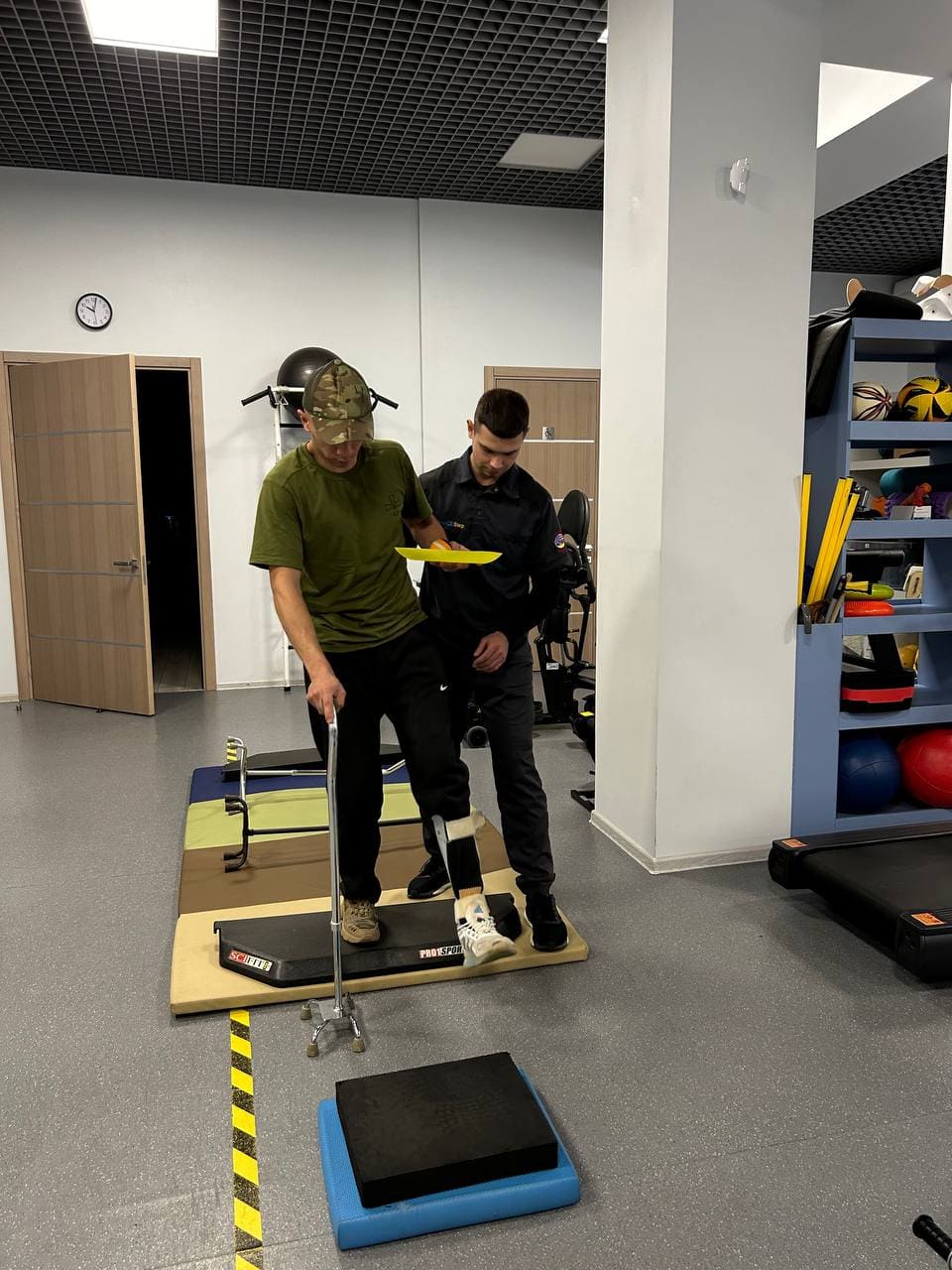
Military Roman
Roman is an exceptionally strong individual and a recent participant in our project in Irpin, who joined us not long ago. After sustaining a shrapnel injury, Roman underwent surgery and spent two months lying down. He began his rehabilitation in a wheelchair. In the first days of training, thanks to the rehabilitation specialist, the soldier learned to walk using a four-point cane.
Later, training with Canadian crutches began. One of the challenges was learning to get up from the floor in a simulated “post-fall” scenario. Roman successfully tackled this task!
For additional support, a special orthosis was ordered to stabilize his left foot. Every day, Roman becomes stronger and more confident in his abilities, thanks to the opportunity to rehabilitate after his injury. He is now working on endurance and confidence while moving both on flat and uneven surfaces.
Gallery
